Clay Cup Round 2 Recap: Ranky Aro Advances to the Round of 16 for the Philippines
Ranky Aro finished 3rd in the Asia bracket of Clay Cup 2026 Round 2 — a live data race where 8 GTM engineers competed to find 30 data points in 20 minutes. Here's how she prepared, how the round unfolded, and what's next.

Ranky Aro just punched her ticket to the Round of 16.
In the Asia bracket of Clay Cup 2026 Round Two, eight GTM engineers competed simultaneously in a live data race. Ranky finished third. She was the only competitor from the Philippines to make it through — and she advanced wearing a Lead Assassin shirt.

Watch Clay Cup 2026 Round 2 — Asia Bracket
Watch Ranky's post-round interview at 2:57:18 →
What Is Clay Cup Round 2?
Round 2 of Clay Cup 2026 is the first live round of the global competition. After Round 1 cut the original field of 128 applicants down to 32, Round 2 split those 32 into four regional brackets — Asia, Americas, Rest of World, and European — and ran them simultaneously on a live stream in front of a global audience.
The format is different from Round 1. Instead of an async submission, Round 2 is a live head-to-head race with eliminations in real time.
The Challenge: 30 Data Points, 20 Minutes
Every competitor in the Asia bracket received the same workbook at the same time.
Inside: 30 questions. All numerical. All requiring Clay to answer.
The questions were tiered by difficulty — easy (100 points), medium (200 points), and hard (300 points). The objective was to score as high as possible within 20 minutes, using only Clay. No AI shortcuts via Sculptor. No pre-built templates. Every formula, every enrichment column, every answer built from scratch in a fresh workbook.
The twist: every five minutes, the lowest scorer on the leaderboard was eliminated. That meant four eliminations across 20 minutes, leaving four competitors standing at the end.
An easy question looked like: *What is the LinkedIn follower count of HubSpot?*
A medium question looked like: *What is the difference between the founding years of Airtable and Linear?*
The hard ones required chaining multiple data lookups and calculations — and most competitors didn't touch them in the first half.
The format rewards speed and accuracy simultaneously. Most competitors raced through easy questions first, banking points before the elimination clock hit. Getting the hard ones right under time pressure is what separated the field.
The Asia Bracket Competitors
Eight builders entered the Asia bracket:
- Napat Pornsiripanich — Thailand
- Sahil Valecha — India
- Ranky Aro — Philippines
- Avik Ghimire — Nepal
- Shashank Chandrasekaran — India
- Mriddul Aanaand — India
- Effa Ahmad — Pakistan
- Imran Hossain — Bangladesh
These are the top Clay builders from across Asia. Every single one of them earned their spot in Round 2 by surviving the Round 1 async submission — so the floor for this bracket was already elite.
How the Race Unfolded
When the 10-second countdown ended, all eight competitors dove into their workbooks at the same time.
The scoreboard lit up fast. Competitors went for easy questions first, stacking 100-point answers. Within minutes the leaderboard spread out — some competitors pulling ahead while others struggled to get started on the medium-tier questions.
Every five minutes, the lowest scorer was cut. The pressure wasn't just about solving the questions. It was about solving enough of the right questions before the clock hit each checkpoint.
Napat led the race throughout. He ripped through medium-tier questions at a pace that left the commentators calling out his progress mid-stream. At one point he was already pushing toward 3,000 points while the rest of the board was still catching up.
Ranky held her position. She didn't top the board — but she stayed out of the elimination zone when it mattered. That is exactly what the format requires.
Ranky's Reaction
When the timer ran out and the final four were confirmed, Ranky was visibly overwhelmed.
On the live stream, the hosts caught her mid-reaction: *"I see Ranky is like clutching her chest. She's just made it through."*
When they brought her on to talk about it, she was raw and direct:
*"I'm so nervous. It's so hot here. And just focus, meeting all the answers. That's it. And I don't even know that it's done. You were just clicking and hoping."*
That is exactly what high-stakes competition feels like. You do not get clarity in the moment. You execute the process you trained for and hope the answers land.
The Final Asia Bracket Standings
Four competitors advanced to the Round of 16:
- 1Napat Pornsiripanich — Thailand
- 2Sahil Valecha — India
- 3Ranky Aro — Philippines
- 4Avik Ghimire — Nepal
Shashank, Mriddul, Effa, and Imran were eliminated.
The Preparation Behind the Win
Ranky did not arrive at Round 2 unprepared.
After winning the Manila nomination event in April, I started coaching her directly. My job as a Certified Clay Expert and — at the risk of stating it plainly — the first GTM engineer in the Philippines, was to get her competition-sharp for a global live format she had never faced before.
We did three preparation sessions.
Session 1 — In Person: Build Within the Time Limit
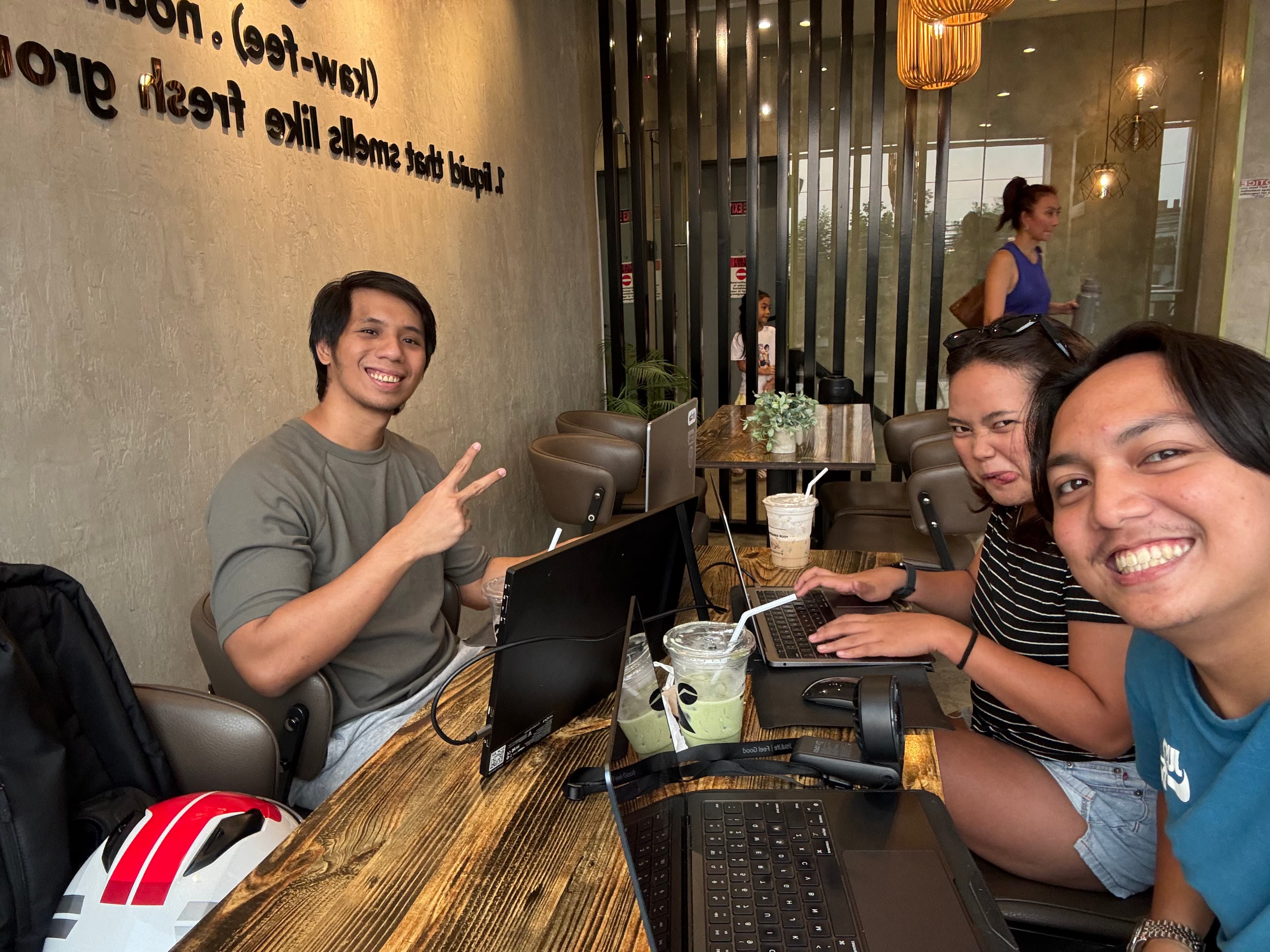
The first session was about speed. The objective was simple: can you complete the challenge within 20 minutes? We ran through the format live, simulated the pressure, and identified where she was losing time. Twenty minutes sounds like enough until you are inside it.
By the end of the session, she could complete a full run within the window. That was the baseline.
Session 2 — Virtual: Accuracy Over Speed
Speed without accuracy is worthless in a points-based format. In the second session, we shifted focus entirely to correctness. We worked virtually and went through each question type — easy, medium, hard — checking that her answers were right, not just fast.
The hard questions are where most points are lost. Getting a 300-point answer wrong is worse than skipping it entirely when you are racing a 20-minute clock with eliminations.
Session 3 — In Front of the Team: Competing with an Audience
The final prep session added the pressure layer. Ranky ran the challenge in front of the Lead Assassin team — not just on a call, but with people watching her screen in real time.
The Clay Cup Round 2 is a live stream event. There is an audience. The commentators are calling your name. Your scoreboard position is public. The final session was designed to make that pressure familiar before it was real.
The three-session structure — speed, accuracy, audience pressure — maps directly to the three things that break people in live competitions. We trained each one separately before combining them.
What's Next: The Round of 16
Ranky advances to the Round of 16 alongside Napat, Sahil, and Avik from the Asia bracket.
She will be joined by qualifiers from the Americas, Rest of World, and European brackets. The 16 competitors going forward are the best GTM engineers in the world right now.
I will continue coaching her.
The Philippines has never had a representative this deep in an international GTM engineering competition. What Ranky is doing — on a global live stream, representing Clay Philippines — is something that matters beyond the competition itself.
Want to follow along as Ranky represents the Philippines in the Round of 16? Follow Lead Assassin on LinkedIn for updates as Clay Cup 2026 continues.
FAQ
What happened in Clay Cup 2026 Round 2?
Clay Cup 2026 Round 2 was a live data race where 32 competitors were split into four regional brackets — Asia, Americas, Rest of World, and European — and competed simultaneously on a global live stream. Each competitor had 20 minutes to find 30 numerical data points using only Clay, with eliminations every 5 minutes. The top 4 from each bracket advanced to the Round of 16.
Who won the Clay Cup 2026 Asia bracket?
Napat Pornsiripanich from Thailand won the Asia bracket, finishing first on the scoreboard. Sahil Valecha (India) placed second, Ranky Aro (Philippines) placed third, and Avik Ghimire (Nepal) placed fourth. All four advanced to the Round of 16.
What was the format of Clay Cup Round 2?
Competitors received a workbook with 30 data points to find — categorized as easy (100 points), medium (200 points), and hard (300 points). They had 20 minutes to score as many points as possible using only Clay. Every five minutes, the lowest scorer was eliminated. The final four in each bracket advanced.
How did Ranky Aro prepare for Clay Cup Round 2?
Ranky Aro went through three preparation sessions coached by Ericson Dalusong — a Certified Clay Expert and one of the first GTM engineers in the Philippines. Session one was in-person and focused on completing the challenge within 20 minutes. Session two was virtual and focused on answer accuracy. Session three was in front of the Lead Assassin team to simulate performing in front of a live audience.
What is Clay Cup 2026?
Clay Cup 2026 is a global GTM engineering competition run by Clay. 128 builders from around the world applied in Round 1, with 32 advancing to the live rounds. The competition runs six rounds, with the final held at Sculpt in San Francisco. The winner takes home $50,000 and a Nasdaq billboard in Times Square.
Who is Ranky Aro?
Ranky Aro is a GTM engineer from the Philippines and the winner of the Clay Cup Manila 2026 nomination event held on April 6, 2026. She defeated other Filipino GTM engineers for the Philippines' spot in the global Clay Cup bracket, then advanced through Round 2 by placing third in the Asia bracket. She is coached by Ericson Dalusong of Lead Assassin.